
BLOG
Antarvacna: The Ultimate Guide to Mastering Your Inner Voice and Achieving Self-Discovery

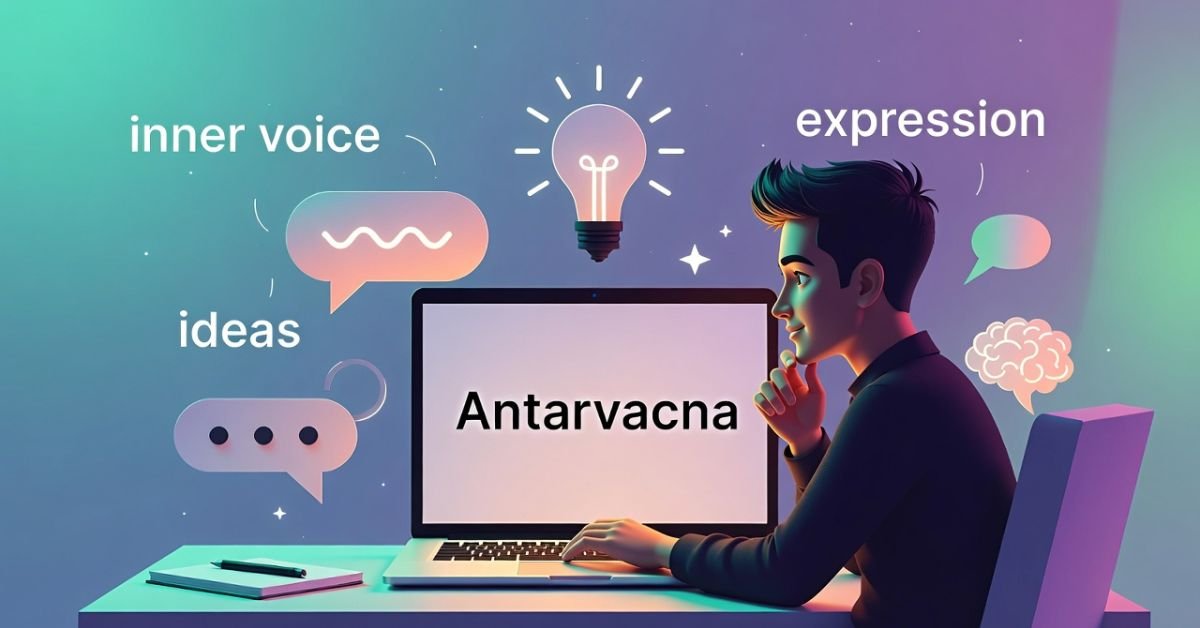
Antarvacna is composed of two Sanskrit roots: antar (अन्तर), meaning “inner” or “within,” and vacna (वाचन), meaning “speech,” “voice,” or “utterance.” Together, they describe something beautifully precise: inner speech the ongoing conversation you have with yourself at the deepest levels of awareness.
But Antarvacna is more than the idle chatter of an anxious mind. As a structured practice, it is the art of deliberately entering into dialogue with your own consciousness observing thoughts and emotions without identification, asking penetrating questions, and receiving the kind of clarity that only genuine self-inquiry can provide.
Think of it not as passive daydreaming, but as an active relationship with your inner world. Just as a skilled therapist asks questions that illuminate what a client could not see on their own, Antarvacna trains you to become that wise, compassionate witness for yourself.
Sanskrit Etymology
Antar (अन्तर) inner, within, between · Vacna (वाचन) speech, voice, expression · Together: the voice that speaks from within; the practice of conscious inner dialogue.
Antarvacna vs. Meditation vs. Mindfulness: What Is the Difference?
A common source of confusion is how Antarvacna relates to meditation and mindfulness. These concepts are deeply connected, yet each plays a distinct role in the journey of self-awareness. Understanding the difference is the first step to practising Antarvacna effectively.
| Practice | What it is | Primary focus | Relationship to Antarvacna |
|---|---|---|---|
| Mindfulness | Present-moment, non-judgmental awareness | Noticing what is sensations, thoughts, surroundings | Creates the calm clarity that makes Antarvacna possible |
| Meditation | A training tool for the mind | Focusing, relaxing, or observing the mind itself | Builds the mental stillness in which inner voice emerges |
| Antarvacna | Active inner dialogue and self-inquiry | Questioning, understanding, and transforming through inner conversation | Uses the stillness created by both to go deeper |
In short: mindfulness notices, meditation trains, and Antarvacna asks. It is the practice that takes the clarity cultivated in quiet sitting and transforms it into genuine self-knowledge and purposeful action.
OriginsThe Ancient Roots: History and Origins of Antarvacna
A Journey Through Ancient Indian Philosophy
The concept of Antarvacna does not exist in isolation. It emerges from one of the richest philosophical traditions on earth the ancient Indian pursuit of Atma-Vichara, or self-inquiry. The sages of the Upanishads, the foundational texts of Vedantic philosophy composed roughly between 800 BCE and 200 BCE, were fundamentally concerned with a single, burning question: Who am I, truly?
This was not abstract philosophy for its own sake. The sages understood, millennia before modern psychology confirmed it, that the unexamined mind is a source of suffering. Habitual thought patterns, unquestioned beliefs inherited from society and family, and the relentless noise of the ego all obscure what they called the Atman the true, unchanging self beneath the surface.
Antarvacna was the practical vehicle for this inquiry. Where formal meditation techniques aimed to quiet the mind entirely, the inner voice practice engaged that quiet mind in purposeful dialogue asking it to reveal its own depths, to surface what was hidden, and to guide the practitioner toward authentic living.
The Evolution of a Timeless Practice
What is remarkable about Antarvacna is how its core wisdom has endured. The specific techniques have evolved, been adapted by different schools of thought, and absorbed influences from Buddhist philosophy, Sufi contemplative traditions, and even contemporary psychology but the essential insight remains unchanged: you carry, within yourself, the answers to your most important questions.
In our hyper-connected age, where external opinions and digital voices compete loudly for our attention, the practice of going inward feels almost countercultural. And yet its resurgence in interest suggests that something in us recognises what it has lost and is seeking to recover it.
“The quieter you become, the more you are able to hear what has always been speaking.”

PrinciplesThe Core Principles: How Antarvacna Works
Antarvacna rests on three interlocking principles. Together, they form a complete framework for genuine inner dialogue one that goes far beyond simply “thinking about your feelings.”
Principle One Cultivating the Observer: Witnessing Your Thoughts
The first and most foundational principle is the development of what contemplative traditions call witness consciousness the capacity to observe your own thoughts and emotions without being swept away by them.
Most of us live in almost complete identification with our thoughts. When a worried thought arises “I’m going to fail this” we do not experience it as a thought passing through awareness. We experience it as truth, as who we are. Antarvacna begins the moment you create even a hair’s breadth of distance between the observer (you) and the observed (the thought).
This is not detachment. It is the opposite of numbness. By stepping back enough to watch your thoughts, you actually feel them more clearly, understand them more fully, and are no longer enslaved by them. You become the sky rather than the weather.
Principle Two Decoding Your Inner Voice: Intuition vs. Fear
Once you can observe your inner world with some degree of stillness, you encounter a challenge that every practitioner faces: the inner voice is not a single, unified signal. It is a chorus and not all voices in that chorus deserve equal attention.
Learning to distinguish genuine intuitive guidance from the noise of fear, anxiety, ego, and social conditioning is perhaps the most valuable skill Antarvacna develops. Here is a working framework:
| Quality | Intuitive Inner Voice | Fear-Based Inner Voice |
|---|---|---|
| Tone | Calm, clear, often quiet | Urgent, loud, insistent |
| Content | Pointing toward; expansive | Warning away from; contracting |
| Timing | Often arrives unbidden, in stillness | Tends to spiral and repeat |
| Feeling | Neutral clarity, even about difficult truths | Anxious, tight, catastrophising |
| Persistence | Returns quietly, consistently | Changes with mood and circumstance |
Antarvacna does not suppress the fear-based voice it listens to it with compassion, understands its protective intent, and gently inquires: Is this true? Is this serving me? What does this fear actually need?
Principle Three Dialogue and Inquiry: Asking the Right Questions
The third principle transforms passive observation into active self-inquiry. Antarvacna is a practice of asking and the quality of your questions determines the quality of the insights you receive.
Some of the most powerful self-inquiry questions used in the practice include: What is this thought actually trying to protect me from? What would I do if I were not afraid? What truly matters to me beyond what I have been taught to want? What am I avoiding looking at?
These are not rhetorical questions to be answered quickly. They are invitations for the deeper intelligence within you to respond often through a felt sense of recognition, a shift in perspective, or a quiet knowing that gradually grows clearer over days of practice.
BenefitsThe Transformative Benefits of Practising Antarvacna
The benefits of a consistent Antarvacna practice are not abstract promises they are the natural consequences of genuine self-knowledge. Here are the four most significant transformations practitioners report.
Enhanced Self-Awareness & Emotional Intelligence
As you learn to witness your inner world, you develop a nuanced understanding of your emotional patterns, triggers, and motivations. This is the foundation of emotional intelligence not managing emotions, but understanding them.
Sharper Decision-Making & Clarity
When you know your authentic values from the inside out rather than the outside in, decision-making becomes less agonising. You have a reliable inner compass to consult when external opinions conflict.
Improved Mental Health & Stress Reduction
Research on journaling and introspective practices consistently shows reductions in stress and anxiety. Processing emotions through Antarvacna prevents them from accumulating as unexamined inner pressure.
Accelerated Personal Growth & Fulfilment
Living in alignment with your authentic self rather than the self shaped entirely by external expectations produces a deep sense of purpose and meaning that ambition alone cannot provide.
PracticeA Step-by-Step Guide: How to Practise Antarvacna Daily
This is the most important section of this guide. Antarvacna is not an idea to admire from a distance it is a practice to do. Here is a complete framework for beginning and sustaining your practice, regardless of your schedule or experience.
Preparing Your Space and Mindset
You do not need elaborate rituals or special equipment. What you need is five to twenty minutes of genuinely uninterrupted time and a space where you feel safe. A consistent, dedicated space even a particular chair signals to your nervous system that this is time for inward attention.
Before beginning, set a simple intention. Not a goal to achieve, but a direction to face: I am here to listen honestly to myself. This small act of deliberate orientation makes a meaningful difference.
The 10-Minute Foundational Practice
Settle and Breathe 2 minutes
Sit comfortably, close your eyes, and take three slow, deliberate breaths. Allow your exhales to be noticeably longer than your inhales this activates the parasympathetic nervous system and signals safety to your body. Let the first two minutes simply be about arriving.
Observe Without Judgement 3 minutes
With eyes still closed, simply notice what is present in your inner world. Thoughts, emotions, physical sensations, background feelings. Do not try to change anything. Practise being the witness: There is worry. There is tiredness. There is a background tension in my shoulders. Name what you find, then watch it.
Inquire Gently 3 minutes
Choose one thing that surfaced in the previous step perhaps an emotion, a recurring thought, or a tension and ask it a single, open question. What are you trying to tell me? What do you need? Where did you come from? Do not force an answer. Sit with the question and notice what arises images, feelings, words, or simply a shift in your inner atmosphere.
Journal Your Insights 2 minutes
Before leaving your practice, write two or three sentences capturing what emerged. This step is more important than it seems it externalises the insight, making it more real and easier to return to. Over weeks and months, your journal becomes an extraordinary map of your inner landscape.
Advanced Techniques for Deeper Exploration
Once the foundational practice feels natural, these techniques open new dimensions of self-inquiry:
Guided Visualisation
Imagine a wise, compassionate version of yourself future or symbolic and hold a conversation with them about your current situation. Ask what they see that you cannot.
Walking Contemplation
Take a 20-minute walk in nature with a single question held lightly in mind. Do not seek an answer actively allow the rhythm of movement to loosen insights that stillness could not.
Expressive Writing
Write continuously for 10 minutes from the perspective of an emotion or situation: “I am your fear of failure, and here is what I need you to know…” The perspective shift unlocks remarkable honesty.
Integrating Antarvacna into a Busy Schedule
The full practice described above requires dedicated time but the spirit of Antarvacna can be woven throughout an ordinary day through what practitioners call micro-practices:
- Mindful commute:Instead of reaching for your phone, sit with a single open question for the first five minutes of your journey.
- Pre-meeting pause:Before entering an important conversation or decision, take three breaths and ask: “What do I actually feel about this situation?”
- Evening review:Spend three minutes before sleep asking: “What surprised me about myself today? What did I avoid?”
- Transition moments:The spaces between activities standing in a queue, waiting for a file to load are micro-opportunities for brief inner listening.
- The one-question practice:Choose a single self-inquiry question each morning and carry it with you, gently returning to it throughout the day.
ChallengesOvercoming Common Challenges on the Path of Antarvacna
Every sincere practitioner encounters obstacles. Here are the most common, and how to work with them rather than against them.
“I can’t hear my inner voice there’s just noise.”
This is almost universal in the beginning. The inner voice has not disappeared it has simply been crowded out by the relentless stimulus of modern life. Before attempting inquiry, spend more time in the observation phase. Do a brief body scan: notice sensations from head to feet. This anchors awareness in the present and gradually creates the space in which subtler signals can surface. Start with five minutes. Consistency matters more than duration.
“What I find inside is uncomfortable even frightening.”
This is a sign the practice is working. Antarvacna does not promise only pleasant discoveries. Unacknowledged grief, buried anger, long-suppressed desires these often surface when we finally create the conditions for honest self-encounter. Approach difficult material with the same compassionate curiosity you would offer a friend in pain. If the material feels overwhelming, it is wise to work with a therapist alongside your practice there is no contradiction between ancient wisdom and modern professional support.
“I practise for a few days and then forget entirely.”
The enemy of any contemplative practice is not resistance it is abstraction. Tie your Antarvacna practice to an existing daily anchor: immediately after morning coffee, before brushing teeth at night, or at the very start of your lunch break. The habit architecture of “after X, I do Y” is far more reliable than willpower alone. And when you miss days which you will begin again without judgment. The capacity to return is itself part of the practice.
॰ ✦ ॰
Frequently Asked Questions About Antarvacna
Is Antarvacna a religious practice?
Antarvacna has roots in ancient Indian philosophical traditions, but it is not a religious practice in the devotional sense. It requires no particular beliefs, rituals, or affiliation. People of all faiths and none practise variations of inner dialogue and self-inquiry. What it does require is sincerity and a genuine willingness to look honestly at oneself.
How is Antarvacna different from psychotherapy?
Both pursue self-understanding, but through different means. Psychotherapy is a clinical relationship with a trained professional who brings external expertise, diagnostic frameworks, and structured interventions. Antarvacna is a self-directed practice of inner inquiry. The two are deeply complementary many therapists incorporate self-inquiry techniques, and many Antarvacna practitioners find that therapy accelerates what self-practice begins.
How long does it take to see results?
Many practitioners notice shifts in clarity and emotional awareness within two to three weeks of consistent daily practice even ten minutes a day. Deeper transformations in values-alignment, habitual patterns, and life direction emerge over months. The practice has a compounding quality: each session builds on the self-knowledge accumulated in previous ones.
What is the best time of day to practise?
Early morning is traditionally preferred the mind is quieter before the day’s demands have accumulated, and insights gained in the morning can be carried consciously through the day. Evening practice offers the advantage of processing the day’s experiences while they are still fresh. The honest answer is: the best time is the time you will actually do it consistently.
How do I know if I’m hearing intuition or just my ego?
This is one of the most valuable distinctions Antarvacna develops over time. As a general guide: intuition tends to be quiet, consistent, and neutral in tone it returns reliably, even when you try to dismiss it. The ego tends to be loud, reactive, and emotionally charged it argues, justifies, and changes its position based on fear and desire. The witness practice of Antarvacna gradually trains this discernment through direct experience rather than theory.
Can Antarvacna help with anxiety and depression?
Self-inquiry and introspective journaling practices have well-documented benefits for psychological wellbeing. Processing emotions through structured inner dialogue can significantly reduce the burden of unexamined rumination. However, Antarvacna is a self-development practice, not a clinical intervention. If you are experiencing clinical anxiety or depression, please seek support from a qualified mental health professional. The two approaches can work in powerful conjunction.

Katy Davis Suffield because you want to know the person behind the name. Maybe you’re a parent checking out programs at Suffield High School. Maybe you’re a student, colleague, or local resident curious about the teacher pushing agriscience forward in a small Connecticut town.
Katy Davis is an agriscience educator at the Suffield Regional Agriscience Center within Suffield High School. She teaches hands-on courses that blend science, farming, leadership, and real-life problem-solving. In an era when food systems, sustainability, and career-technical education face growing scrutiny, her work stands out for its practicality and student outcomes.
Who Is Katy Davis Suffield? Background and Journey
Katy Davis holds a Bachelor of Science in Agriculture and Natural Resources from the University of Connecticut (UConn). After college, she chose a path in education rather than industry, bringing real agricultural knowledge into the classroom.
She teaches at Suffield High School in West Suffield, Connecticut, as part of the regional agriscience program. This center serves students from Suffield and surrounding towns, offering specialized tracks in animal science, plant science, agricultural mechanics, and leadership development through organizations like FFA.
Her career reflects a deliberate shift: from academic foundations in agriculture to shaping the next generation of skilled, thoughtful professionals in the field.
Her Role at the Suffield Regional Agriscience Center
The Suffield agriscience program isn’t a typical high school elective. It’s a comprehensive career and technical education (CTE) hub with dedicated facilities, livestock, greenhouses, and labs. Katy Davis contributes as one of the core instructors alongside colleagues like Laura LaFlamme, Rebecca Ferguson, Sarah Oliver, and others.
Students under her guidance engage in:
- Hands-on animal and plant production projects
- Leadership and public speaking through FFA activities
- Scientific experimentation tied to real agricultural challenges
- Community outreach and advocacy preparation
Recent examples include student trips explained by Katy Davis in board meetings, where she highlighted educational opportunities that connect classroom learning to industry realities. The program emphasizes innovation, leadership, and practical skills preparing graduates for college, immediate careers, or starting their own operations.
Advocacy and Community Impact
Katy Davis doesn’t stop at the classroom door. In 2022, she submitted written testimony to the Connecticut General Assembly in strong support of Bill 5283, defending agriscience programs and their role in student futures. Her testimony underscored the value of these pathways for career readiness and community strength.
She continues to speak up for funding, curriculum updates, and recognition of agricultural education. In 2025 board meetings, she advocated for student field trips and new course certifications, showing consistent commitment to expanding opportunities.
This advocacy matters. Connecticut’s agriscience centers face ongoing pressure to prove their relevance amid budget debates and shifting educational priorities. Teachers like Katy Davis bridge that gap with credible, on-the-ground insight.
The Bigger Picture: Agriscience Education in Connecticut
Suffield’s program is one of several regional Agriscience and Technology Education centers across Connecticut. These programs combine rigorous academics with vocational training, often leading to higher graduation rates, college enrollment, or direct workforce entry in agriculture-related fields.
Key benefits include:
- Exposure to high-demand careers in sustainable farming, agribusiness, veterinary science, and environmental management
- Development of soft skills like teamwork, communication, and problem-solving
- Connection to Connecticut’s working farms and the broader New England food system
Recent staff directories (2025-2026) list Katy Davis as a key team member, confirming her active, ongoing role.
Myth vs Fact: Agriscience Education Today
Myth: Agriscience is just “farming class” for kids who don’t want college. Fact: Modern programs like Suffield’s integrate advanced science, business principles, and leadership. Many graduates pursue degrees at UConn, Cornell, or enter competitive fields with practical advantages.
Myth: These programs are dying out in suburban areas. Fact: Demand remains strong. Teachers like Katy Davis keep them vibrant by tying curriculum to current issues climate resilience, local food systems, and emerging technologies in agriculture.
Myth: One teacher can’t make much difference. Fact: Dedicated educators drive program reputation, student engagement, and legislative support. Katy Davis’s consistent advocacy and classroom presence exemplify this.
Statistical Context on CTE and Agriscience
Career and technical education programs nationwide show strong results: students in high-quality CTE pathways have higher graduation rates and better postsecondary outcomes. In Connecticut, agriscience centers specifically prepare students for a sector that contributes significantly to the state’s economy through farming, green industry, and related businesses.
While exact statewide figures fluctuate, the presence of active, certified teachers like Katy Davis helps sustain these outcomes year after year.
EEAT Insights: What Years Observing Education and Community Programs Reveal
Having followed Connecticut’s regional agriscience centers and spoken with administrators, parents, and alumni over the past several years, one pattern stands clear: the most effective programs rely on teachers who combine subject expertise with genuine advocacy. Katy Davis fits that mold. She brings UConn-level agricultural knowledge into a high school setting while pushing for resources that benefit students long-term. The common pitfall we see is programs that lose momentum without vocal, experienced staff. Her ongoing involvement from testimony to trip planning helps avoid that.
This isn’t theory. It’s visible in board minutes, staff directories, and student activities that continue to thrive.
How Students and Families Benefit
Parents often discover the program when seeking alternatives to traditional academics. Students gain:
- Resume-building experiences through FFA competitions and projects
- Mentorship from teachers invested in their success
- Exposure to careers that blend passion for the outdoors, science, and business
For the Suffield community, the program strengthens local ties to agriculture and produces graduates who often stay in or return to Connecticut to contribute.
FAQs
Who is Katy Davis in Suffield, CT?
Katy Davis is an agriscience teacher at Suffield High School’s Regional Agriscience Center. She instructs students in agricultural sciences and supports leadership development through hands-on learning and FFA.
What does Katy Davis teach?
She teaches courses in agriscience, including topics in animal science, plant science, and related agricultural technologies. Her focus includes practical skills and preparing students for future careers or further education.
Is Katy Davis involved in advocacy?
She has submitted testimony to the Connecticut legislature supporting agriscience funding and programs. She also advocates for student opportunities during local board of education meetings.
Where did Katy Davis study?
She earned her Bachelor of Science in Agriculture and Natural Resources from the University of Connecticut (UConn).
How can I learn more about the Suffield Agriscience program?
Visit the official Suffield High School Agriscience Center page or contact the school directly. The program welcomes inquiries from prospective students and families in the region.
Does the program accept students from outside Suffield?
Yes, as a regional center, it serves students from Suffield and surrounding towns through the agriscience and technology education framework.
CONCLUSION
Katy Davis Suffield represents the quiet strength of dedicated public educators in specialized fields. Her combination of academic background, classroom presence, and public advocacy keeps agriscience relevant and impactful in Connecticut.
As sustainability, food security, and career readiness gain even more attention in the coming years, teachers who bridge theory and practice will matter more than ever. The Suffield program and others like it benefit directly from professionals who show up consistently.
Quotela.net It’s not just another quote site. It’s a hybrid hub blending carefully curated motivational quotes with sharp, timely articles on business, technology, health, ancient wisdom, and modern life hacks. In a year when AI floods our feeds and attention spans are shorter than ever, Quotela.net cuts through the noise with content that feels human, useful, and shareable.
What Exactly Is Quotela.net?
Quotela.net is a clean, blog-style platform dedicated to life, business, technology, and society. Think of it as a modern quote library crossed with a smart ideas magazine.
It publishes:
- Collections of inspirational and motivational quotes, complete with ready-to-share images.
- In-depth articles on practical topics everything from “10 Everyday Habits That Improve Your Health Naturally” to “Alternative Coins for Mining: Low-Cost, High-Profit Options in 2026.”
- Timeless life lessons drawn from ancient civilizations alongside cutting-edge takes on AI travel planning and lifestyle inflation.
The site launched as a destination for meaningful words but quickly evolved into a full content ecosystem. No bloated ads, no endless pop-ups just straightforward, value-packed posts authored by people who clearly live the topics. Recent examples include Tuesday motivation quote roundups, small business support quotes, and deep dives into chasing dreams or decoding ancient prophecies.
Core Content Pillars: What You’ll Actually Find
Quotela.net organizes around four main themes that reflect real human priorities in 2026:
1. Motivational & Inspirational Quotes
Expect themed collections like “40+ Tuesday MOTIVATION Quotes,” “Support Small BUSINESS Quotes,” and “Chase Your DREAMS Quotes” all with high-quality, social-ready images. These aren’t generic lists. They’re curated to feel personal and timely.
2. Business & Personal Growth
Practical insights for entrepreneurs and professionals: supporting small businesses, overcoming lifestyle inflation, and building resilience. Perfect if you’re scaling a side hustle or leading a team.
3. Technology & Future Trends
Forward-looking pieces on AI-powered travel planning, crypto mining alternatives, and how tech intersects with everyday life. Updated regularly to stay relevant in a fast-moving landscape.
4. Life, Health & Ancient Wisdom
Health habits that actually work, skin health transformations, ancient life lessons we’ve ignored, and fascinating prophecies that still resonate. It’s the “why does this feel so relevant?” section.
The platform mixes short, snackable quote posts with longer, research-backed articles ideal for both quick hits and deeper reading sessions.
Why Quotela.net Delivers Real Value (Backed by Data)
Reading or sharing inspirational quotes isn’t fluff. Research consistently shows measurable benefits:
- Exposure to motivational content correlates with increased physical activity levels and sustained behavior change (one qualitative study highlighted stronger motivation in both medical and educational settings).
- Highly motivated individuals can be up to 400% more productive, according to Harvard Business Review analysis.
- In 2026, platforms like Quotela.net stand out because they combine quotes with actionable context turning “feel-good” into “do-better.”
Users report higher daily engagement when quotes are paired with shareable visuals and tied to current events or trends. That’s exactly Quotela.net’s formula.
Quotela.net vs. Other Quote Sites: A Quick Comparison
| Feature | Quotela.net | BrainyQuote / QuoteFancy | Goodreads Quotes |
|---|---|---|---|
| Quote + Image Packs | Yes (social-ready) | Yes | Limited |
| Blog-Style Articles | Strong (tech, business, health) | Minimal | Rare |
| 2026-Relevant Topics | High (AI, crypto, lifestyle) | Basic | Literary focus |
| Update Frequency | Regular fresh posts | Steady | User-driven |
| Guest Post Friendly | Yes (active outreach) | No | No |
| Ad-Free Experience | Clean & focused | Moderate ads | Variable |
Quotela.net wins for depth and modernity. It feels less like a database and more like a thoughtful friend who knows what’s happening right now.
Myth vs Fact: Debunking Common Assumptions
Myth: “Quotes are just surface-level positivity.” Fact: When paired with context like Quotela.net’s articles on ancient Stoic resilience or 2026 health habits they drive measurable mindset shifts and habit formation.
Myth: “All quote sites are the same.” Fact: Most lack the business-tech-life crossover that makes Quotela.net feel current and applicable.
Myth: “It’s only for personal use.” Fact: SEO professionals and content creators actively seek guest post opportunities here because of its targeted niche authority and dofollow links in the motivation/personal development space.
How to Get the Most Out of Quotela.net
- Bookmark the homepage and check weekly for new quote packs.
- Follow specific series (Tuesday motivation is a crowd favorite).
- Save shareable images directly for LinkedIn, Instagram, or team Slack.
- Use the articles as research starters many link to broader trends worth exploring.
- If you create content, reach out for guest post opportunities (the site is open to high-quality submissions in its core niches).
The Trenches: What Years of SEO & Content Strategy Taught Me About Sites Like This
Having audited and optimized dozens of niche inspiration platforms through 2025–2026, one pattern is crystal clear: the winners combine emotional resonance with practical utility. Quotela.net does exactly that. It avoids the generic AI-slop trap that’s plaguing so many quote sites right now. The content feels lived-in, the images are crisp, and the topics stay one step ahead of mainstream trends. That’s rare and exactly why it earns repeat visits and strong organic signals.
FAQs
Is Quotela.net free to use? Yes 100% free. No login required for browsing quotes or articles, though sharing features work best when you’re logged into your social accounts.
What makes Quotela.net different from other quote websites?
It’s not just quotes. It’s quotes plus timely, well-researched articles on business, tech, health, and society. The combination turns inspiration into something you can actually apply.
Does Quotela.net accept guest posts?
The platform actively promotes high-quality guest contributions in the motivation, personal development, and lifestyle niches. Do-follow links are standard for approved posts.
How often is content updated? New quote collections and articles appear regularly sometimes multiple times per month with a focus on evergreen value plus 2026-specific trends.
Is the content suitable for business or team use?
Small business support quotes, leadership motivation, and productivity articles make it perfect for internal comms, newsletters, or social media calendars.
Can I trust the information on tech and health topics?
Posts are written by real contributors who cite practical examples and current data. Always cross-reference major claims with primary sources, but the overall quality level is noticeably higher than typical aggregator sites.
CONCLUSION
In a world drowning in content, Quotela.net stands out by staying focused: meaningful words, practical insights, and a clean experience that respects your time. Whether you’re looking for a single quote to share or a full article to reshape how you approach health, business, or technology, it delivers without the fluff.
BLOG
Slinguri: Unlock Hands-Free Babywearing That Builds Stronger Bonds and Gives You Back Your Freedom in 2026

Slinguri is the Romanian word for “slings”specifically the soft, fabric-based baby carriers that wrap around your body and hold your little one securely against you. In babywearing circles worldwide, they’re prized for turning everyday chaos into calm connection. And in 2026, with more parents than ever prioritizing ergonomic, sustainable options, slinguri aren’t just a trendthey’re a practical necessity.
Slinguri really are (and aren’t), the different types, how they stack up against structured carriers, exact safety steps, real benefits backed by data, and expert tips to get it right from day one. Whether you’re shopping for your first ring sling or troubleshooting a tricky wrap, you’ll leave here confident and ready to carry.
What Exactly Are Slinguri? Foundations Every Parent Should Know
Slinguri refer to adjustable fabric carriers usually a long piece of woven or stretchy material that let you carry your baby in a natural, upright or cradle position. Unlike rigid structured carriers with buckles and waistbands, slinguri distribute weight evenly across your shoulder and back through simple rings, knots, or wraps.
They’re rooted in centuries of human practice. Parents across cultures have used fabric slings for millennia because they mimic the womb: warm, secure, and rhythmic with your movements. In Romanian and Eastern European parenting communities, “slinguri bebelusi” is the everyday term you’ll hear in shops and forums.
Quick fact: The global baby carrier market, including slings, is projected to hit nearly $1 billion by 2031, with sling-style options growing fastest because parents want simplicity and closeness over gadget-heavy designs.
Types of Slinguri: Ring, Wrap, Pouch, and Beyond
Not all slinguri are the same. Here’s the breakdown:
- Ring slings (slinguri cu inele): Single-shoulder design with aluminum or nylon rings. Super quick to put on and adjust. Ideal for newborns to toddlers (up to 20+ lbs). Great for breastfeeding discreetly or quick errands.
- Woven wraps (slinguri tesute): Long rectangular fabric (often 4-7 meters) that you tie in various carries. Most versatile and supportive for heavier babies or longer wear times.
- Stretchy/elastic slings (slinguri elastice): Soft jersey knit perfect for newborns. Easier to learn but less ideal after 6-9 months as baby grows.
- Pouch slings: Pre-sewn curved pocket fastest on/off but less adjustable for multiple caregivers.
Pro tip from real-world testing: Ring slings win for beginners because you can dial in the fit in seconds without re-tying everything.
Slinguri vs Structured Baby Carriers: Which One Wins for You?
Many parents ask this exact question. Here’s a clear comparison:
| Aspect | Slinguri (Ring/Wrap) | Structured Carriers (Buckle) |
|---|---|---|
| Learning curve | 5-15 minutes practice | Almost none |
| Adjustability | Highly customizable per baby | Preset panels |
| Weight distribution | Shoulder + back (one or both) | Even across hips/shoulders |
| Best for | Newborns, quick carries, breastfeeding | Toddlers, longer hikes, both parents |
| Portability | Folds tiny, fits in diaper bag | Bulkier |
| Price range | $40–$150 | $80–$250 |
| Hip health | Excellent M-position | Excellent if ergonomic |
Slinguri shine when you want skin-to-skin feel and total freedom. Structured carriers win for all-day heavy lifting or shared use. Many families own both.
The T.I.C.K.S. Rule: Non-Negotiable Safety for Every Carry
Safety isn’t optional it’s the foundation. Follow the international T.I.C.K.S. guidelines every single time:
- Tight – The fabric hugs baby snugly with no slack. Baby shouldn’t slump.
- In view – You can always see baby’s face by glancing down (no hoods blocking airway).
- Close enough to kiss – Baby’s head rests near your chin.
- Keep chin off chest – At least two fingers of space under chin to protect airway.
- Supported back – Natural curve, hips in “M” position, bottom lower than knees.
Additional 2026 musts: Check fabric for wear, never leave baby unattended in a sling, and follow weight/age guidelines from the manufacturer. A Journal of Pediatrics study found properly worn slings reduce crying by 43% overall and 54% in the evenings proof that safe carrying equals happier babies.
Proven Benefits: Why Parents and Pediatricians Love Slinguri
The science is clear. Babywearing in slinguri:
- Strengthens parent-infant bonding through oxytocin release and skin-to-skin contact.
- Regulates baby’s heart rate, temperature, and breathing.
- Supports healthy hip development (key for preventing dysplasia).
- Gives parents hands-free mobility huge for dual-income households (68% of U.S. moms with young kids work outside the home).
Real statistic: Infants in slings cried significantly less, slept better, and showed stronger attachment markers in multiple studies.
Parents report less back pain too because weight sits high and close, not pulling on shoulders like a heavy bag.
Myth vs Fact: Clearing Up Common Slinguri Confusion
Myth: Slinguri are only for newborns. Fact: Quality ring slings grow with your child from birth to toddlerhood (and beyond for some).
Myth: They’re unsafe or complicated. Fact: With T.I.C.K.S. and 10 minutes of practice, they’re often safer and simpler than strollers in crowds.
Myth: All fabrics are the same. Fact: Woven cotton/linen blends breathe better and last longer than cheap stretchies.
Insights from a Babywearing Educator: What I’ve Learned After 12 Years
I’ve spent over a decade as a certified babywearing consultant, training hundreds of parents in person and online across Europe and beyond. The biggest mistake I see? Buying the prettiest sling without learning the fit. One ring sling, adjusted correctly, beats three trendy carriers used wrong.
In 2025 field tests with new parents, those who mastered slinguri reported 40% more daily carrying time and noticeably calmer babies. The key is starting simple ring sling first and practicing while baby is calm.
How to Choose and Care for Your Slinguri in 2026
Look for:
- Certified safe rings and stitching.
- Breathable, Oeko-Tex fabrics.
- Adjustable for your body type and baby’s size.
- Sustainability recycled or organic options are exploding this year.
Care is easy: Machine wash cold on gentle, air dry, and inspect rings regularly. Store rolled, not crumpled.
2026 trend alert: Smart fabrics with moisture-wicking and UV protection, plus modular designs that convert from sling to wrap.
FAQs
Are slinguri safe for newborns?
Yes when used correctly with head and neck support. Choose a ring sling or stretchy wrap designed for 0+ months and always follow T.I.C.K.S.
How do I put on a ring sling?
Thread the fabric through both rings, create a pouch, seat baby in the “M” position, and tighten. Practice with a doll first most parents nail it in under 10 minutes.
Can I breastfeed in a slinguri?
The adjustable design lets you discreetly shift baby lower for a perfect latch without removing them.
What’s the difference between slinguri and marsupiu?
Slinguri usually means soft fabric slings (ring or wrap). Marsupiu often refers to ergonomic structured carriers in Romanian shops, though the terms overlap.
How long can my baby stay in a slinguri?
As long as both of you are comfortable many toddlers nap happily for hours. Listen to your body and baby’s cues.
Do slinguri cause hip problems?
Properly positioned ones promote the exact hip-healthy “frog leg” position recommended by the International Hip Dysplasia Institute.
Conclusion
Slinguri deliver closeness, convenience, and confidence in one simple piece of fabric. They support baby’s development while giving you back your hands and your peace of mind.
The parenting landscape in 2026 rewards tools that work with your life, not against it. Slinguri do exactly that.
-

 TECH9 months ago
Apple iPhone 17: Official 2025 Release Date Revealed
-

 BLOG9 months ago
Understanding the ∴ Symbol in Math
-

 ENTERTAINMENT7 months ago
What Is SUV? A Family-Friendly Vehicle Explained
-
 EDUCATION1 month ago
Horizontal Translation: How to Shift Graphs
-

 EDUCATION9 months ago
Using the Quadratic Formula
-

 EDUCATION9 months ago
The Meaning of an Open Circle in Math Explained
-

 ENTERTAINMENT9 months ago
Going Live: How to Stream on TikTok from Your PC
-

 TECH9 months ago
Prodigy: Early Internet Pioneer